

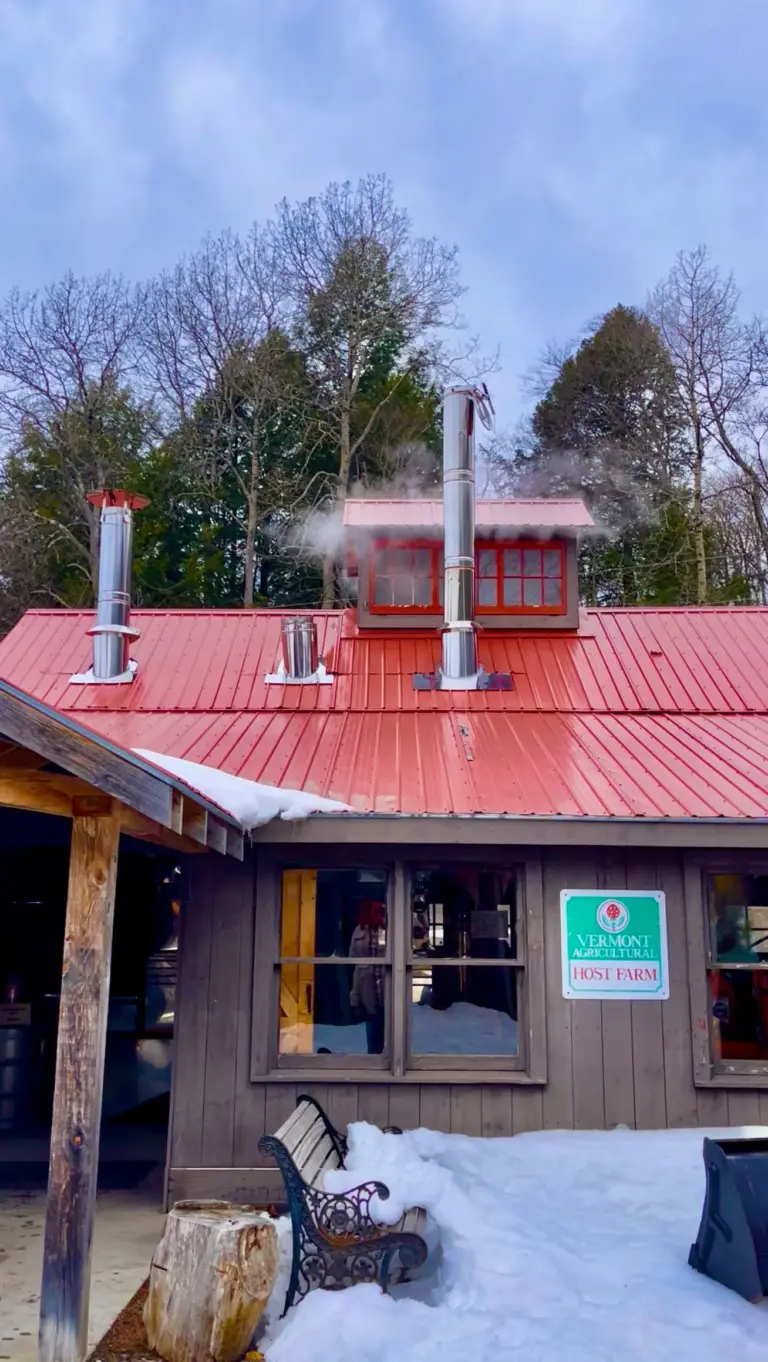
There are a few very reliable signs that spring is coming to Vermont. The days get longer, dirt roads turn into mud, buckets and tubing appear on maple trees and steam starts billowing from sugarhouses around the state.
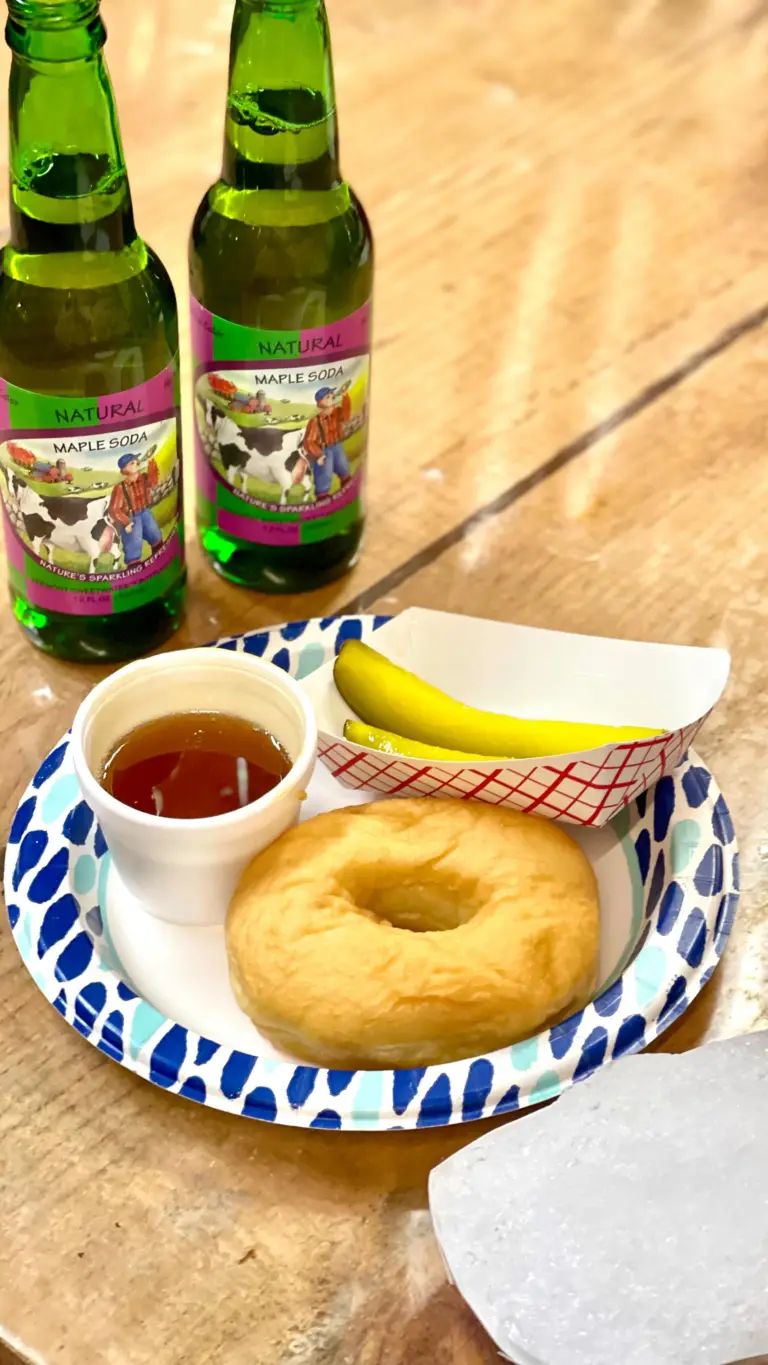
Then someone hands you a plate containing maple syrup, snow, a plain donut and a pickle. Welcome to maple season.
Sugar on snow is one of Vermont’s oldest and most nostalgic maple traditions, and if you’ve never experienced it, sugaring season is the time to fix that. You’ll find it at sugarhouses, maple festivals and events around the state, particularly during Vermont’s annual Maple Open House Weekend when maple producers invite visitors inside to see how syrup is made and, most importantly for our purposes, feed you maple things.
But what exactly is sugar on snow? Why does maple syrup suddenly turn into something resembling taffy when it hits the snow? And what is that pickle doing there?
There’s actually a reason for all of it.
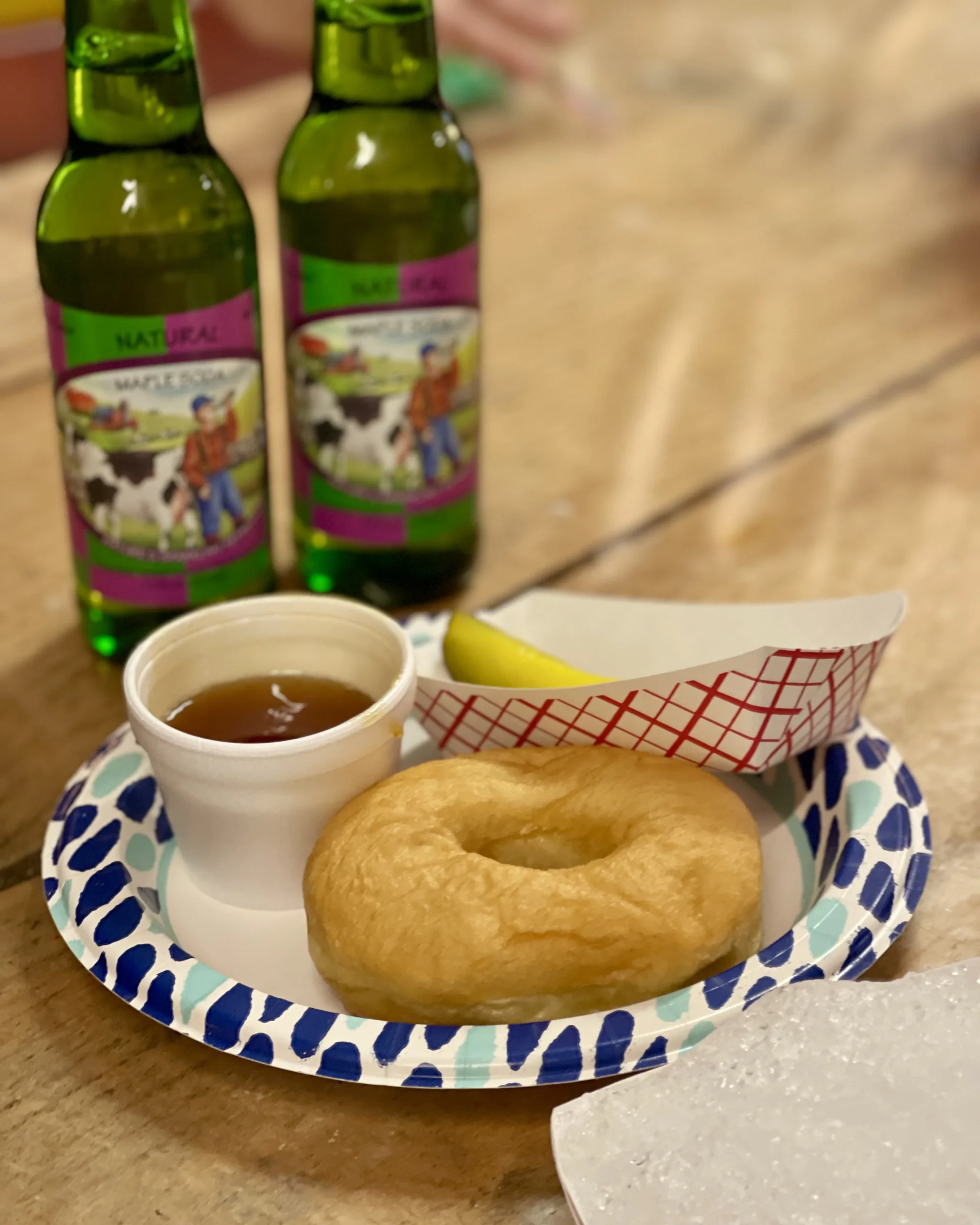
What Is Sugar on Snow?
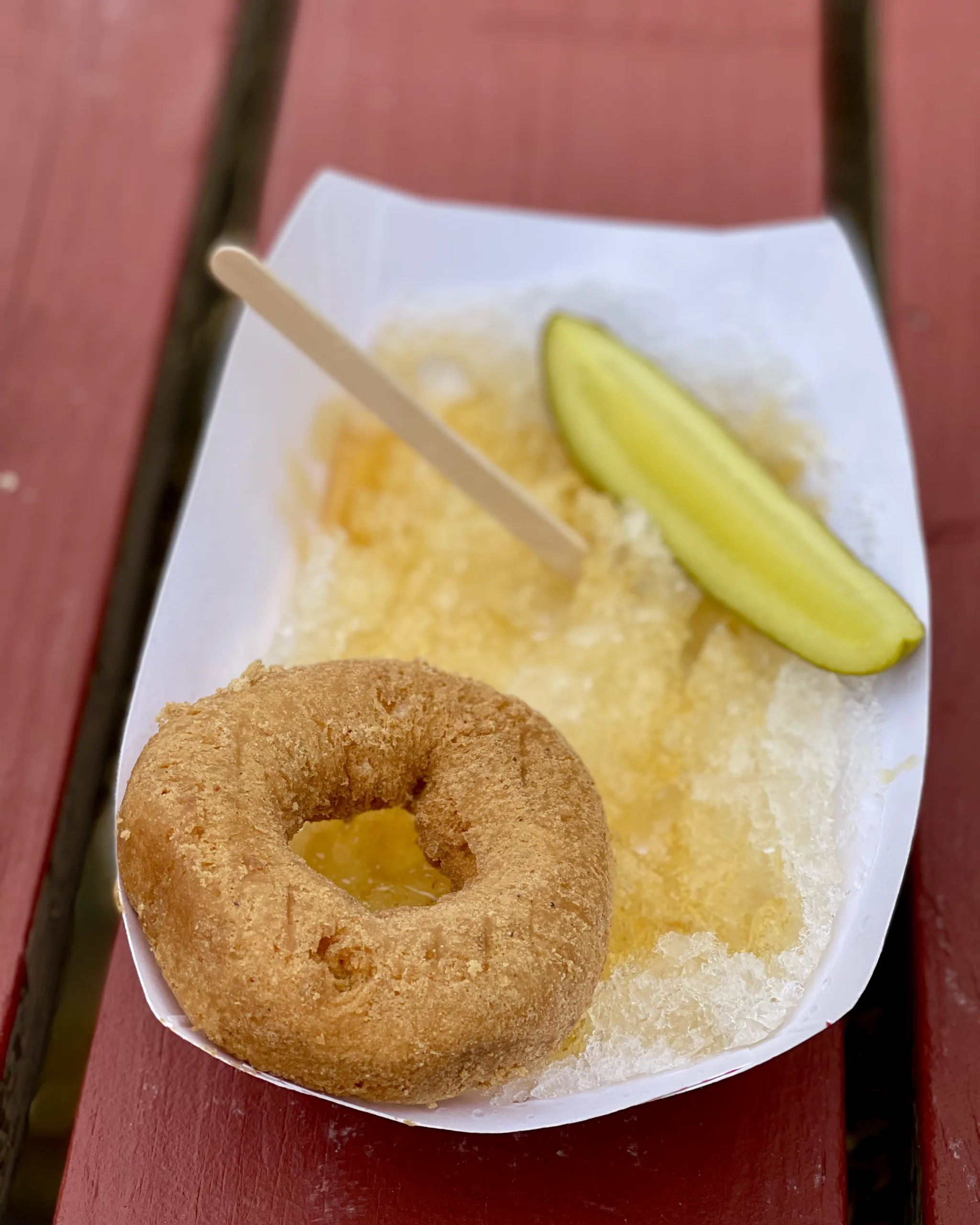
Sugar on snow is made by heating maple syrup and pouring it over snow or crushed ice. When the hot syrup hits the cold surface, it rapidly cools and thickens into a soft, chewy, taffy-like maple candy that you can twist around a fork or wooden stick and eat immediately.
Simple ingredients. Considerably more technique than you’d assume.
The maple syrup needs to reach the right temperature and consistency before it’s poured. Around 235°F is a common target for producing that chewy texture, although maple makers may adjust slightly based on conditions and their preferred consistency.
Get it right and the syrup transforms almost instantly when it touches the cold snow.
Instead of soaking into it or remaining liquid, the maple becomes thick and stretchy. Grab a fork or stick, start twisting and you have what is essentially warm maple taffy made from some of the freshest syrup of the season.
This is Vermont candy.
Do Vermonters Actually Use Snow?
Despite the name, your sugar on snow may not involve actual snow.
Fresh, clean snow can certainly be used, and plenty of Vermonters will tell you that’s how it should be done. But by the time maple season gets into full swing, particularly during warmer years, finding pristine snow isn’t necessarily as simple as walking outside with a bowl.
Crushed ice works too and is often a considerably more practical and predictable option for sugarhouses serving large numbers of visitors.
The important part is having an extremely cold surface that can rapidly cool the hot syrup and create that chewy consistency.
Does actual snow taste better? You’ll find plenty of Vermonters willing to argue that it does. I’ll let you conduct your own research.
Why Does Maple Syrup Turn Into Taffy?
This is where sugar on snow becomes a little science experiment.
Maple syrup is primarily sugar and water. Heating it drives off additional water and concentrates the sugar. As the syrup reaches the proper temperature, its sugar concentration becomes high enough that cooling it rapidly produces a soft candy rather than simply returning it to ordinary syrup.
That’s why temperature matters so much.
Pour regular maple syrup straight from the bottle onto snow and you’re going to have maple-flavored snow. Delicious, perhaps, but not sugar on snow.
Heat it too little and it may stay runny. Go too far and the maple can become harder and more candy-like than the soft, chewy texture you’re trying to create.
Maple makers historically used cold surfaces to help judge the stage and consistency of boiling syrup and sugar. Drop a little hot maple onto snow, ice or another cold surface and you can quickly see how it behaves as it cools.
Eventually, testing the maple became a treat in its own right.
An excellent outcome for quality control.
Sugar on Snow Has Deep Roots in Vermont Maple Season
Before you could walk into a Vermont country store and choose from shelves of candy, chocolate and other sweets, maple was an incredibly important local source of sugar.
Vermont families were tapping maple trees and boiling sap generations before the modern tubing systems, reverse-osmosis machines and highly controlled evaporators you’ll see in many sugarhouses today. Maple sugar could be stored and used throughout the year, while maple candy and sugar on snow turned the annual harvest into something worth celebrating.
Sugar on snow became associated with late winter and early spring, when syrup was being produced and snow was still available outside.
That’s part of why it still feels so connected to sugaring season.
You’re not simply eating maple candy. You’re eating something tied directly to the few weeks each year when freezing nights and warmer days get sap moving through Vermont’s maple trees.
Why Is Sugar on Snow Served With a Pickle?
Now to the important question. Why would anyone look at a plate of maple taffy and decide what it really needs is a pickle? Balance.
Sugar on snow is intensely sweet. You’re essentially eating concentrated maple sugar, and after a few bites your palate knows it.
The sharp acidity and saltiness of a dill pickle cut through that sweetness and reset your taste buds before you go back for more maple.
It sounds strange until you try it. Sweet maple. Sour pickle. More maple. Suddenly the pickle makes perfect sense.
And yes, I know this combination sounds like something invented on a dare.
Trust Vermont on this one.
And Why Is There a Plain Donut?
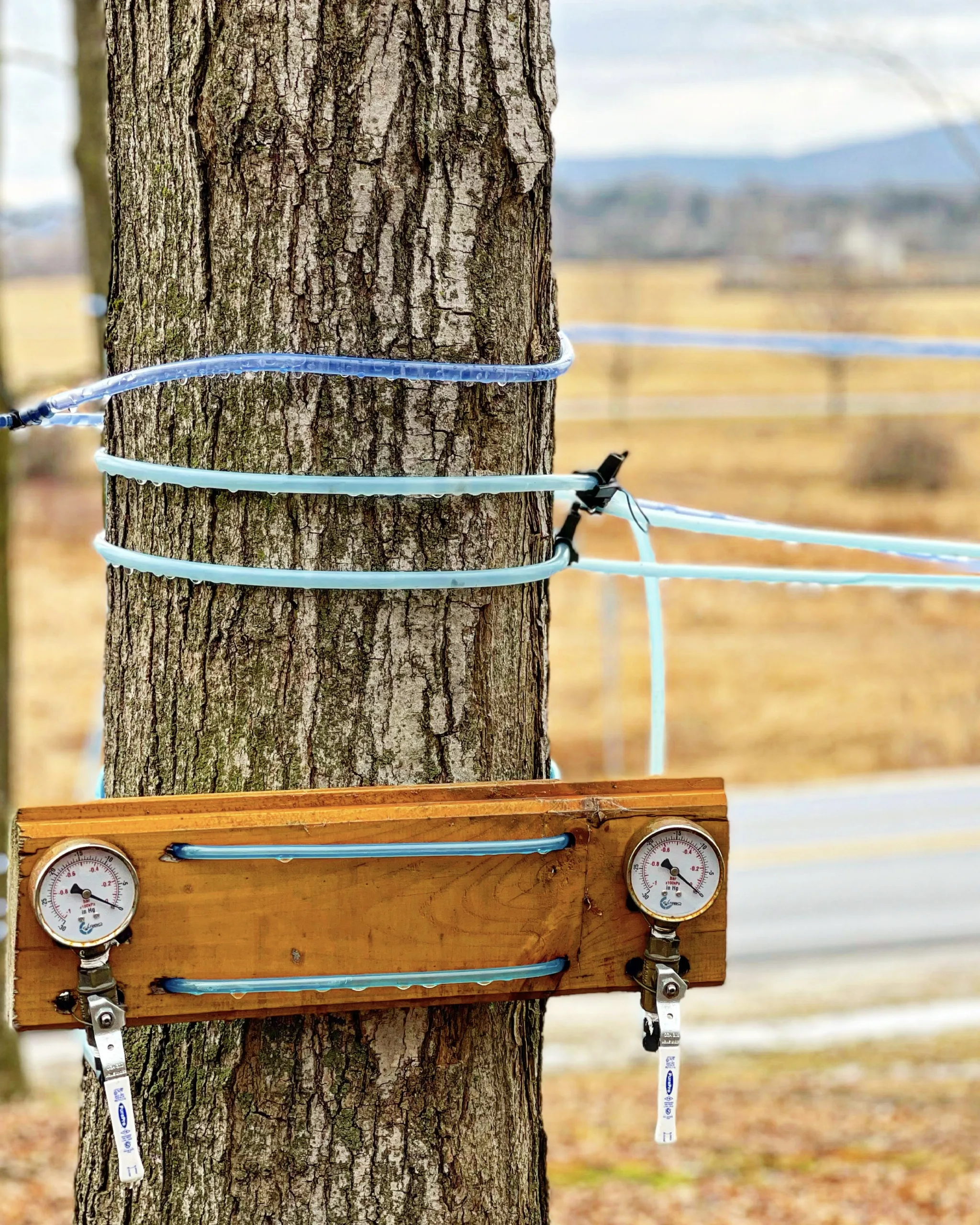
The traditional sugar-on-snow plate can also include a plain raised donut.
Compared with the maple taffy, the donut is intentionally understated. You’re not looking for a giant frosted pastry covered in toppings. The plain donut gives you something relatively neutral to eat alongside the concentrated sweetness of the maple.
Between the donut and pickle, you have two very different ways of breaking up the sugar.
It’s an old-fashioned combination that can look a little bizarre if you’ve never encountered it before, but that’s also part of what makes going to a Vermont sugarhouse during maple season so much fun.
You aren’t ordering dessert from a carefully composed restaurant menu.
You’re participating in a tradition.
When Can You Try Sugar on Snow in Vermont?
Your best opportunity is during Vermont’s maple season, generally in late winter and early spring.
Exact timing changes every year because sugaring depends heavily on weather. Maple sap flows best when nights drop below freezing and daytime temperatures rise above it, so producers watch the forecast closely and work around the conditions they’re given.
One of the easiest times for visitors to experience maple season is Vermont Maple Open House Weekend, when participating sugarhouses around the state open their doors for tours, demonstrations, tastings and maple foods.
Sugar on snow is a popular offering, but don’t assume every sugarhouse serves it or serves it continuously throughout the season. If this is specifically what you’re hunting for, check the current year’s participating sugarhouses and their menus before you make the drive.
What to Expect at a Vermont Sugarhouse
If you’ve only ever encountered maple syrup in a plastic jug at the grocery store, visiting a working Vermont sugarhouse gives you a completely different appreciation for what’s inside it.
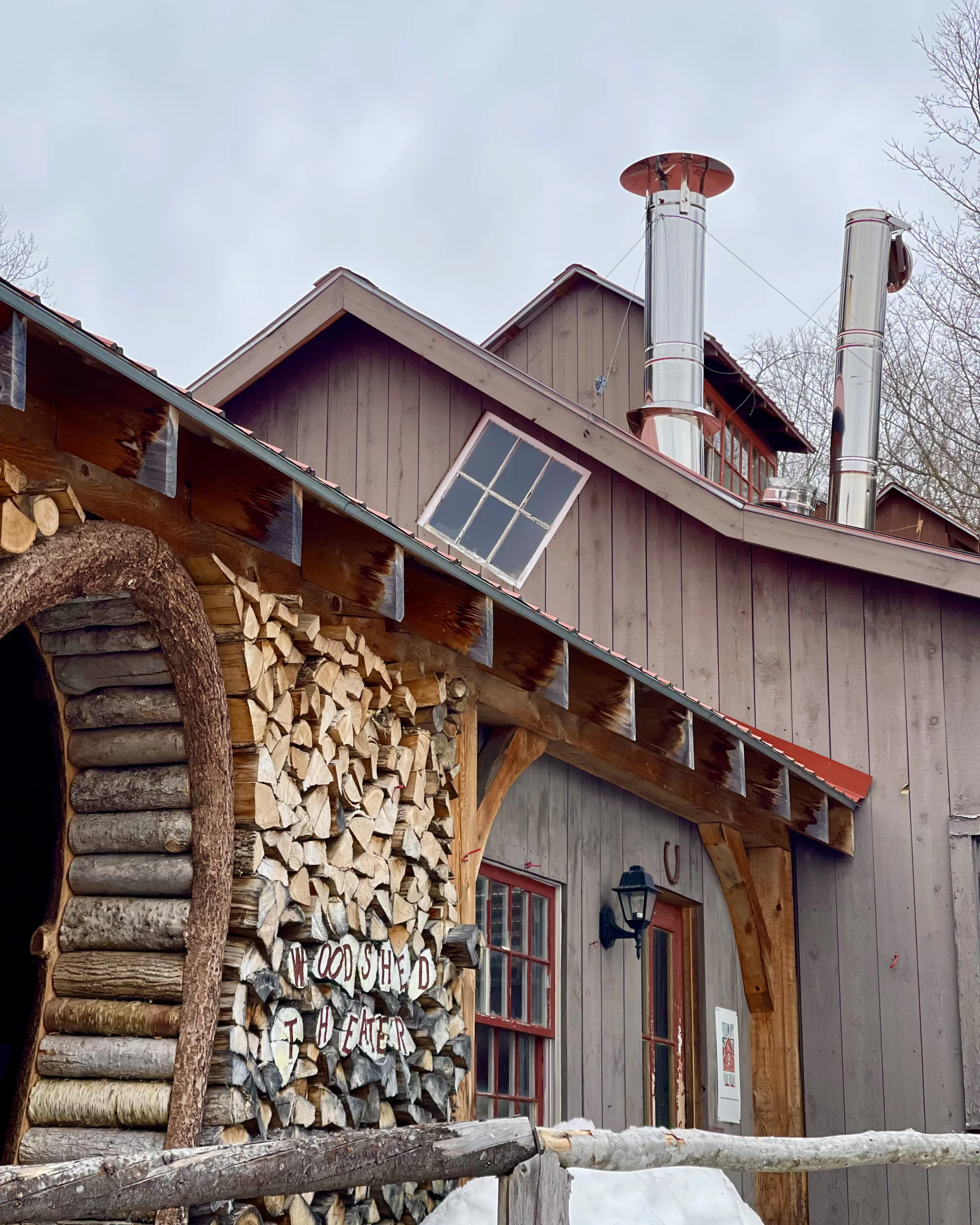
You’ll see how sap gets from the trees to the sugarhouse, how much water needs to be removed to transform sap into syrup and how maple operations have evolved from buckets and wood-fired boiling to tubing systems and modern equipment.
Depending on where you go, you might also find maple candy, maple cotton candy, maple cream, maple donuts, maple creemees and plenty of syrup to taste and bring home.
And during open-house events, there’s a good chance you’ll smell the sugarhouse before you fully understand what you’re smelling.
Steam, woodsmoke and boiling maple sap in cold early-spring air is one of those extremely specific Vermont seasonal experiences.


Make Sugar on Snow Part of a Vermont Maple Weekend
If you’re visiting Vermont specifically for maple season, don’t make one sugarhouse your entire itinerary.
Choose a region and visit a few.
Different maple producers have different operations, histories and specialties, and part of the fun is seeing how differently the same basic process can look from one farm to another.
Stop somewhere for sugar on snow. Find another sugarhouse serving maple creemees. Buy syrup directly from a producer. Take a tour. Ask questions. Drive the backroads and look for steam coming from sugarhouses along the way.
And remember that maple season overlaps with mud season.
Your idyllic dirt-road shortcut may be considerably less idyllic in March.
One of the Sweetest Signs of Spring in Vermont
Vermont spring doesn’t arrive with flowering trees and 70-degree afternoons. At least not initially.
It arrives with snowbanks shrinking along the roads, muddy boots by the door, steam coming out of sugarhouses and sap running through miles of tubing in the woods.
And somewhere, hot maple syrup is being poured over a pile of snow.
Twist it around a fork while it’s still soft. Take a bite. Follow it with a pickle if the sweetness starts catching up with you.
Then go back for more. If you’ve made it through another Vermont winter, I think you’ve earned it.




Talk with locals
Comments
Be the first to chime in
Been here? Your tip could save the next visitor a wrong turn.