

If you’re anything like me, by the end of a long Vermont winter you’re ready for fresh air, sunshine and a walk that doesn’t require three layers and microspikes.
The problem? Spring is also mud season.
As the snow melts and the ground thaws, many of Vermont’s hiking trails, particularly at higher elevations, become saturated and extremely vulnerable to damage. Walking across those muddy trails doesn’t just result in filthy boots. It can widen paths, damage vegetation and create erosion that lasts well beyond spring.
So while I’m itching to get back into the mountains too, this is the time of year I look for alternatives.
Paved recreation paths, rail trails, lower-elevation walks and flatter routes can give you the outside time you’ve been craving without immediately heading for Vermont’s higher peaks. Conditions still vary tremendously in spring, so always pay attention to closures, posted signs and what’s actually happening under your feet.
Here are seven places I’d consider when you’re looking for an easy walk or outdoor adventure during early spring in Vermont.
1. Robert Frost Interpretive Trail Local favorite: Robert Frost Interpretive Trail | Ripton
If you want something short, easy and distinctly Vermont, start with the Robert Frost Interpretive Trail in Ripton.
The trail is located in the Green Mountain National Forest near the Middlebury Bread Loaf campus, where Robert Frost spent many summers. Rather than simply naming the trail after him, the route incorporates his writing into the experience.
Excerpts from Frost’s poems are posted throughout the trail, so you’re reading his words while walking through the kind of landscape that inspired so much of his work.
The loop is only about a mile, and much of the route travels over relatively flat terrain and boardwalks. You’ll move through woods and wetland habitat without needing to commit to a strenuous hike.
This is one of those trails I’d recommend even to someone who isn’t coming to Vermont specifically to hike. The poetry makes it more of an experience than simply a walk in the woods.
Because you’re still in a natural area, spring conditions matter here too. Check current conditions and respect any closures before heading out.

2. Trail Around Middlebury | Middlebury
The Trail Around Middlebury, better known as the TAM, is particularly useful because it isn’t one single trail.
It’s a network of approximately 19 miles circling Middlebury and connecting neighborhoods, natural areas, schools, parks and other public spaces. That means you can choose a section based on how much time you have and what conditions look like that day rather than committing to the entire route.
Different segments take you through areas including Chipman Hill, Battell and Means Woods and the Boathouse Bridge, giving you everything from wooded trails to more developed sections.
You can explore much of the network on foot, and certain sections are also open to bikes.
I’d pull up the current TAM map and choose your section before heading out. During mud season, wooded portions can still be wet, and temporary closures or requests to avoid particularly vulnerable sections should always take priority over your original plan.
The beauty of having 19 miles to choose from is that you can change the plan.
3. Colchester Causeway | Colchester
I might be biased because I live in Colchester, but I think the Causeway is arguably one of the most scenic walks in Vermont.
And spring is one of my favorite times to use it.
Starting from Airport Park, you can follow the Island Line Trail toward Lake Champlain before eventually heading onto the historic Causeway itself. Once the trees open up, you’re walking with water on both sides, the Adirondacks across the lake and the Green Mountains behind you.
It genuinely feels like you’re walking on water.
The historic Causeway extends roughly 3.25 miles across Lake Champlain, although the route from Airport Park to The Cut at the northern end is closer to five miles. You definitely don’t need to walk the entire thing to appreciate it.
That’s another reason it works so well for early spring. Walk until you’ve had enough and turn around.
Just remember that the Causeway is incredibly exposed. Spring wind coming across Lake Champlain can make it feel much colder than it did when you left the parking lot, so bring an extra layer.
I’ve put together a complete guide to the Colchester Causeway with parking information, distances, dog rules and details about the seasonal Island Line Bike Ferry if you want to plan a longer trip.
4. Lamoille Valley Rail Trail | Northern Vermont
If you’d rather have 93 miles to work with, there’s the Lamoille Valley Rail Trail.
The LVRT crosses northern Vermont from Swanton to St. Johnsbury, passing through 18 communities along a former railroad corridor. At 93 miles, it’s the longest rail trail in New England.
Don’t let that number intimidate you.
You aren’t supposed to do all 93 miles on a casual Saturday morning.
The advantage of the LVRT is that you can access individual sections in communities across northern Vermont and build your outing around whatever distance works for you. Walk a few miles, bring a bike or use it as part of a larger road trip.
One of my favorite ways to experience it is from Johnson, where you can rent an e-bike or fat bike and head out onto the trail without needing to bring your own equipment.
The relatively gentle grades of the former railroad corridor also make the LVRT approachable for people who don’t necessarily want a traditional mountain hike.
Spring conditions can still affect portions of the trail, though. Snowmelt, flooding and soft surfaces can create temporary closures or make certain sections unsuitable for use, so check current trail conditions before you go.
5. Merck Forest & Farmland Center Local favorite: Merck Forest & Farmland Center | Rupert
If you really want to feel like you’re back in the woods, head south to Merck Forest & Farmland Center in Rupert.
Merck encompasses thousands of acres of conserved forest and farmland, with an extensive trail network giving you plenty of choices depending on how ambitious you’re feeling.
One of the reasons I love recommending Merck is that the experience isn’t limited to hiking.
This is also a working farm, so you can combine time on the trails with a visit around the farm and see what’s happening seasonally. Spring is an especially interesting time to visit as the farm wakes back up after winter.
The property is open year-round for outdoor recreation, but don’t interpret that to mean every trail is always appropriate to hike.
This is still Vermont in mud season.
Pay attention to current conditions, stick to appropriate routes and be willing to change plans if a trail is saturated. Merck has enough space and variety that you don’t need to force a particular hike just because it’s the one you originally intended to do.
6. Ethan Allen Park | Burlington
You don’t have to leave Burlington to find a good spring walk.
Ethan Allen Park protects approximately 60 acres of wooded land in the city’s New North End, with a network of trails that feels surprisingly removed from the surrounding neighborhoods.
The highlight is the Ethan Allen Tower.
Climb to the top when it’s open and you’ll get elevated views toward Lake Champlain, the Adirondacks and surrounding Burlington area without having to hike a Vermont mountain to earn them.
That’s a pretty good mud-season trade.
The park works especially well if you want to get outside for an hour rather than dedicate an entire day to an adventure. Walk the trails, head up to the tower and then continue with whatever else you were planning in Burlington.
Again, use some judgment with the wooded trails after rain or significant snowmelt. Being in a city park doesn’t make mud disappear.
7. Burlington Greenway | Burlington
If trail conditions everywhere else look questionable, this is one of my easiest recommendations.
The Burlington Greenway, often called the Burlington Bike Path, follows the Lake Champlain shoreline for approximately eight miles through Burlington.
Because you’re on a developed recreation path rather than a mountain trail, it’s an excellent place to walk, run or bike when Vermont’s higher-elevation trails need a break.
And you aren’t sacrificing scenery.
You’ll get Lake Champlain and Adirondack views for much of the route, plus easy access to Burlington’s waterfront parks and neighborhoods. You can make this a quick walk or spend several hours following the path north and south.
If you’re heading south, stop at Oakledge Park to find the Earth Clock, a 43½-foot stone circle that functions as a clock, compass and calendar when you step inside it.
It’s one of my favorite quirky pieces of Burlington public art and gives you an actual destination rather than simply walking until you feel like turning around.
Why You Should Stay Off Vermont’s Muddy Mountain Trails
Mud season trail etiquette isn’t just Vermonters being overly protective of the woods.
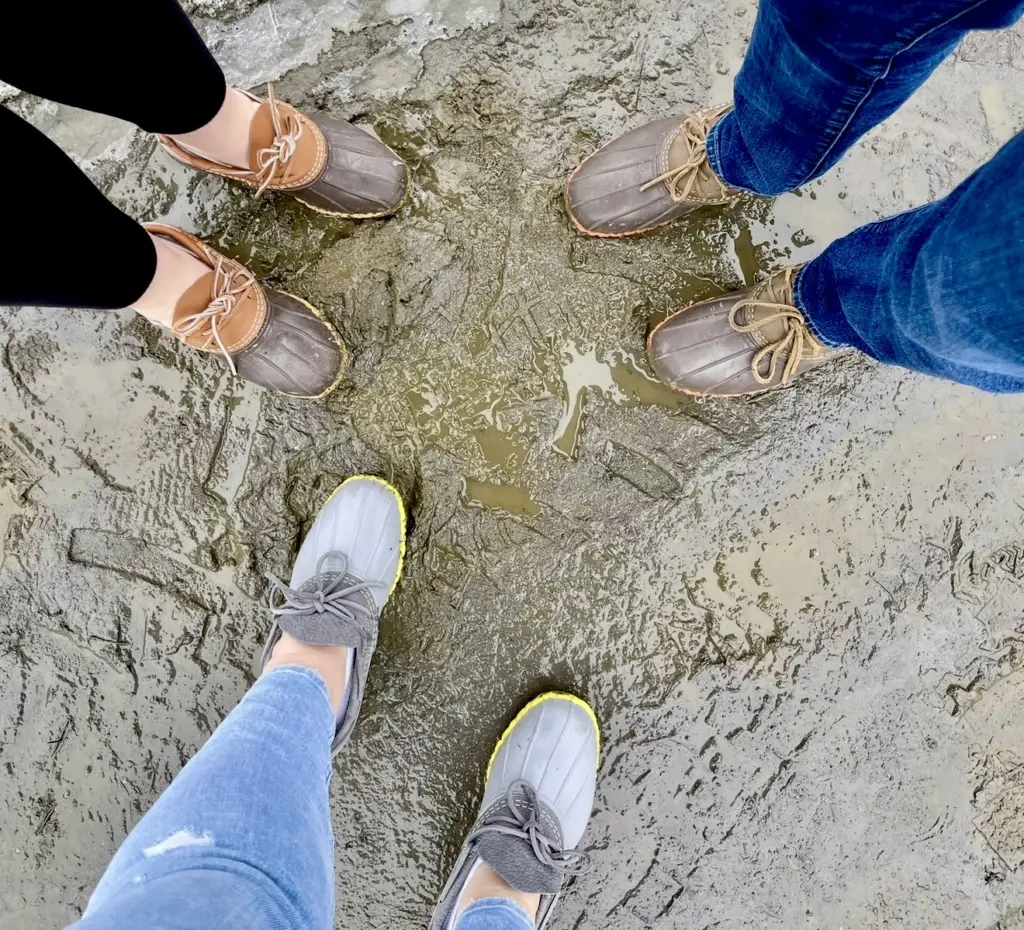
When frozen ground begins thawing in spring, trails become saturated and particularly vulnerable. Walking directly through mud can deepen erosion. Walking around it widens the trail and damages surrounding vegetation.
Either way, the trail loses.
Higher-elevation trails also tend to thaw later than conditions in Burlington, the Champlain Valley and other lower elevations might lead you to believe.
You can have a warm, sunny spring afternoon in town while mountain trails remain covered in snow, ice and deep mud.
That’s why I don’t use a specific calendar date to decide when hiking season has started.
I pay attention to trail conditions.
If an organization managing the land asks people to stay off a trail, stay off it. Vermont’s mountains aren’t going anywhere.
You Don’t Have to Wait Until Summer to Get Outside
Mud season gets a bad reputation in Vermont, and I’ll admit it’s not our most photogenic time of year. But there is something very good about those first spring days when the sun finally feels warm again. You don’t need to climb a mountain to enjoy them.
Walk out onto Lake Champlain on the Colchester Causeway. Pick a section of the TAM. Bike a few miles of the Lamoille Valley Rail Trail. Read Robert Frost while walking through Ripton. Wander around Merck Forest or stay right in Burlington and follow the Greenway along the lake.
Save the high peaks for when they’re ready.
After a Vermont winter, sometimes a long walk in the sunshine is enough.





Talk with locals
Comments
Be the first to chime in
Been here? Your tip could save the next visitor a wrong turn.