

This morning, I found myself driving the dirt roads of Strafford, Vermont, showing land parcels in the middle of stick season.
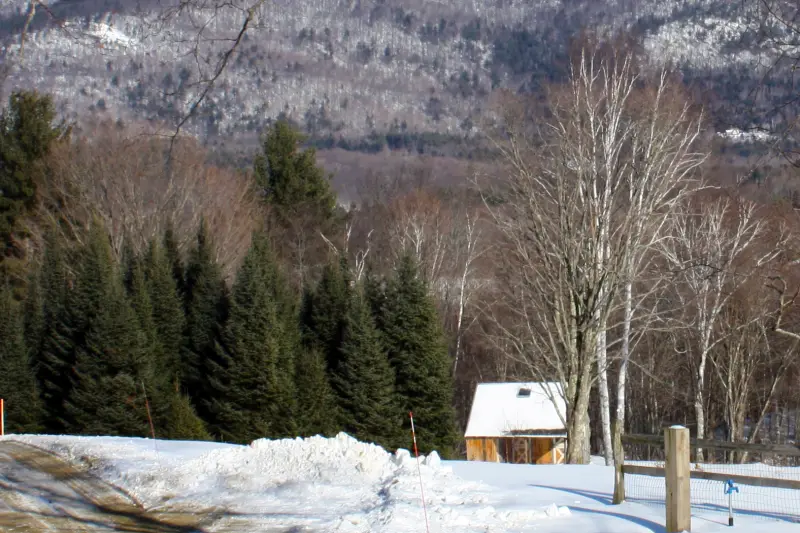
The leaves were gone. The roads were muddy in places. The mountains had settled into that muted November palette of brown, gray and deep green that arrives after foliage and before snow. Cell service disappeared miles before I reached where I was going, and nearly every driver I passed lifted a hand from the steering wheel to wave.
Every time I come to Strafford, I fall a little more in love with this pocket of Vermont. And if the name sounds familiar even though you’ve never been here, there’s probably a reason.
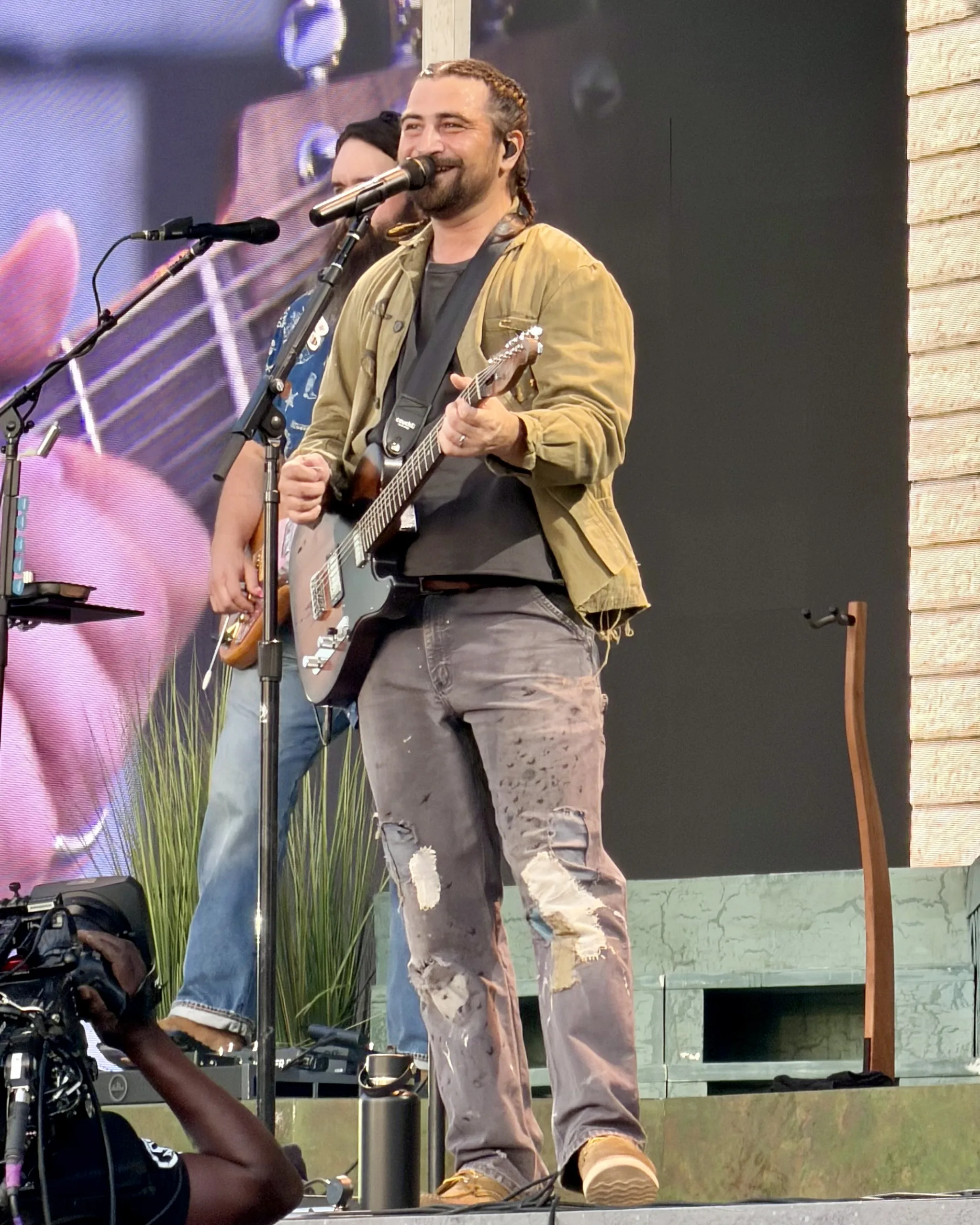
Strafford is the hometown of Noah Kahan, whose music has introduced millions of listeners to a version of small-town Vermont filled with back roads, changing seasons, complicated relationships with home and the particular isolation that can come with growing up somewhere rural.
But if you come to Strafford looking for a Noah Kahan tourist attraction, you’re going to miss the point. There’s no celebrity spectacle here.
What you’ll find instead is the place behind some of that music: a tiny Vermont town of farms, dirt roads, forests, brooks and neighbors who actually know one another.
Where Is Strafford, Vermont?
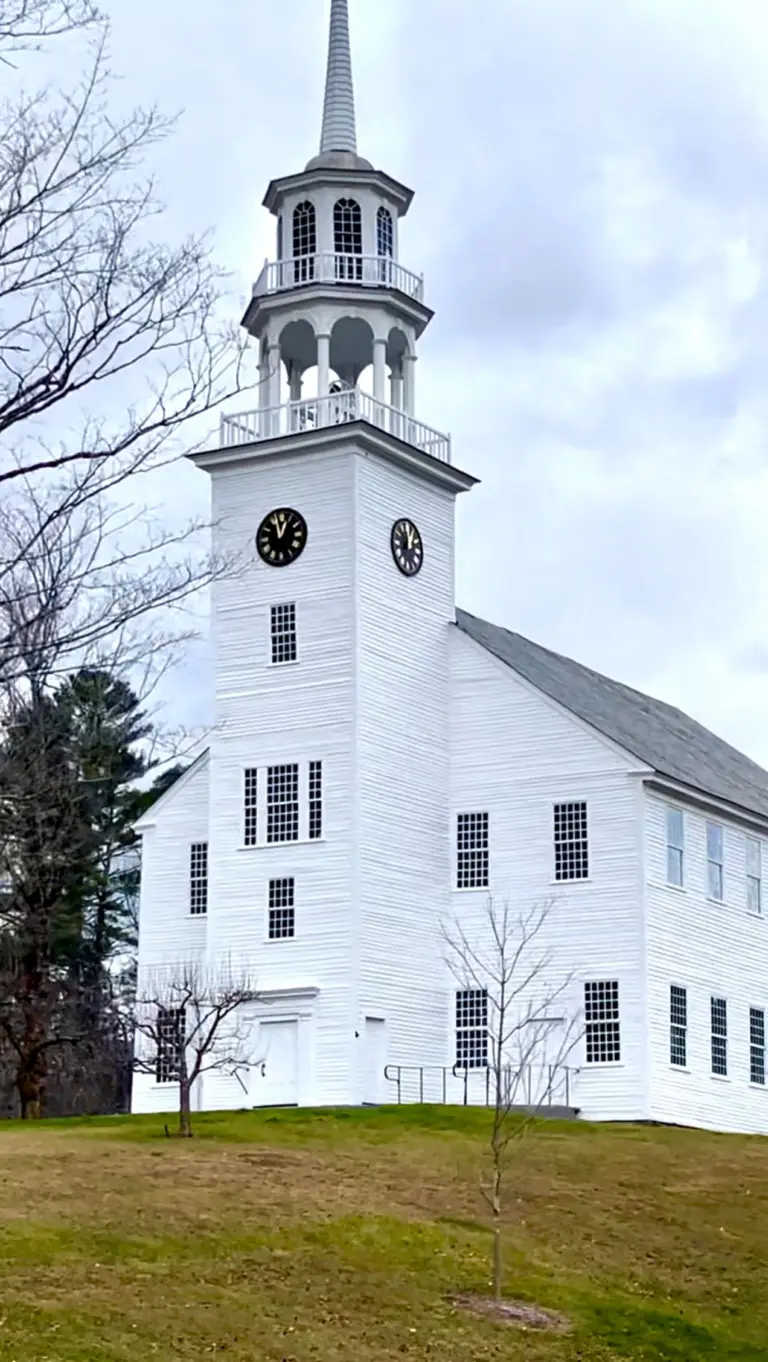
Strafford is a small town in Orange County in eastern Vermont, within the greater Upper Valley region near the New Hampshire border.
It’s rural even by Vermont standards.
The population is only a little over 1,000 people, and once you leave the larger roads behind, you’ll spend a lot of time driving on dirt. Cell service can disappear completely in parts of town, businesses are limited and you won’t find the collection of restaurants, coffee shops and stores that visitors might associate with Vermont’s better-known destinations.
That’s important to understand before visiting. Strafford isn’t Stowe, Woodstock or Manchester on a smaller scale. It’s a working rural community, and that’s exactly what makes it interesting.


Yes, This Is Noah Kahan’s Hometown
Noah Kahan grew up in Strafford, and if you’ve spent enough time listening closely to his lyrics, arriving here can feel strangely familiar.
The landscape makes sense. The small population makes sense. The isolation makes sense. So does the tension between wanting to leave a small town and feeling permanently attached to it.
But what I find particularly interesting about Strafford’s connection to Kahan is how different it feels from the celebrity tourism you might encounter in other places associated with famous musicians.
Here, he’s also a local. A neighbor.
Someone whose roots are part of the community rather than an attraction the community has been rebuilt around.
His connection to Vermont has also extended beyond his music through the Busyhead Project and its work supporting mental health initiatives, including efforts connected to the state and communities that shaped him.
That’s a far more meaningful connection to Strafford than trying to find a particular house or recreate a photograph.
If you’re visiting because his music made you curious about this part of Vermont, let the town itself be what you came to see.

This Is the Kind of Vermont Where People Wave
Drive through Strafford and you’ll quickly notice something. People wave. Not every single person, of course, but often enough that after the third or fourth car, you start automatically lifting your own hand from the steering wheel.
It’s such a small gesture, but it tells you something about the scale of the community.
In a town this small, the person coming toward you probably isn’t an anonymous stranger. They may be your neighbor, someone whose kids go to school with yours, the person who plows a nearby driveway or somebody you’ll see at the general store later.
Even when they don’t know you, the wave remains. You should probably wave back.
The General Store (Coburn’s) Still Matters
In a rural Vermont town without a long Main Street lined with businesses, the local general store becomes more than somewhere to buy something you forgot.
It’s where you run into people. It’s where conversations happen. It’s where local news travels and where a quick errand can take longer because you end up talking to someone you know.
That social role is easy to underestimate if you’re accustomed to living somewhere where errands are mostly anonymous.
In towns like Strafford, these gathering places are part of the infrastructure of community life.
You might arrive looking for coffee or groceries and leave knowing what happened down the road yesterday.
You’ll Drive a Lot of Dirt Roads
If your vision of Vermont includes winding dirt roads disappearing between fields and forests, Strafford delivers.
A significant part of exploring this area means leaving pavement behind.
These roads connect farms, homes, forests and tiny clusters of community, and they’re one of my favorite parts of driving through this region.
They’re also actual roads people live on and use every day.
Drive respectfully. Slow down when conditions call for it, especially during mud season. Don’t block a road for a photograph, and don’t treat someone’s driveway, field or private property as part of a sightseeing route.
The scenery might look like a postcard to you.
For someone else, it’s Tuesday’s commute home.
Sometimes the Loudest Thing You Hear Is Water
One of the things I notice most when I’m in Strafford is the quiet.
Not absolute silence.
Natural quiet.
The sound of a brook moving over rocks. Wind through trees. Birds. Tires crunching along a dirt road. Whatever happens to be moving around in the woods nearby.
When you spend enough time in places filled with traffic, construction, airplanes and constant background noise, you almost forget how much sound disappears in a rural town.
Then you stand beside a piece of land in Strafford and realize the brook is the loudest thing you can hear.
It’s difficult not to breathe a little deeper.
Don’t Count on Your Cell Phone
Your cell phone may become significantly less useful here.
Service is limited or nonexistent in parts of Strafford, and you can drive for miles without a reliable signal depending on your carrier and location.
If you’re visiting, plan accordingly.
Download your directions before you go. Don’t assume you’ll be able to pull up a map once you’re deep into the back roads, and if you’re meeting someone, figure out the details before you lose service.
As someone who drives all over Vermont for work and for Travel Like a Local, I’ve learned not to treat cell coverage as a given.
Strafford is an especially good reminder.
And once you’ve figured out where you’re going, maybe leave the phone alone for a while.
This is a pretty good place for that.
Don’t Come Expecting a Tourist Town
This is probably the most important thing I’d tell someone curious about visiting Strafford.
There isn’t a traditional tourism infrastructure waiting for you.
You won’t find a packed restaurant district, a row of boutiques or a checklist of attractions designed to fill your day. Dining and other amenities are limited in town, so you’ll likely need to venture into surrounding Upper Valley communities for more options.
That’s not a flaw.
It’s simply what Strafford is.
If you want a Vermont vacation where you walk from your hotel to shops, restaurants and a brewery, there are other towns I’d recommend first.
Come to Strafford because you’re interested in rural Vermont itself.
Come for the roads, landscape, architecture, history and sense of place.
Farming and the Outdoors Still Shape Life Here
Strafford feels connected to the land in a way that becomes obvious as you drive through it.
Farms remain part of the landscape. Forests cover the hillsides. Brooks cut through valleys. Homes can sit far apart from one another, and the outdoors isn’t something confined to a recreation area you visit on weekends.
It’s everywhere.
That creates a different rhythm of life, one tied more closely to weather and seasons than many people are accustomed to.
Mud season isn’t an abstract Vermont joke when your dirt road is actually mud.
A snowstorm matters differently when you’re miles from the nearest larger town.
Stick season exposes views that disappear behind leaves all summer.
And when spring finally arrives, you notice.
Stick Season Might Be When Strafford Makes the Most Sense
Most visitors understandably want Vermont in October.
I get it. Foliage season is extraordinary.
But there was something about driving through Strafford during stick season that felt particularly appropriate.
Without the leaves, there was nothing distracting from the bones of the landscape. You could see deeper into the woods, across fields and through the hills. The roads were quiet. The colors were subdued. There wasn’t a tour bus or leaf-peeping traffic jam in sight.
Stick season gets treated like Vermont’s least photogenic time of year.
I think it’s one of the most revealing.
This is Vermont after the show.
And in a place like Strafford, that makes it easier to see the town for what it actually is.
Visiting Strafford Respectfully
If Noah Kahan’s music is what first made you curious about Strafford, I think that’s a perfectly good reason to want to see the area.
Music can make us curious about the places that shaped the people who create it.
But Strafford is a community, not a celebrity attraction.
Respect private property. Don’t go searching for a musician’s private home or places that aren’t publicly identified for visitors. Don’t stop in the road for photos or wander onto farms and private land.
Instead, experience the landscape and community that made you curious in the first place.
Drive the dirt roads. Visit public places. Explore the wider Upper Valley. Notice how quiet it gets when you step out of the car.
And wave when someone passes you.
What Is Strafford, Vermont Really Like?
Strafford isn’t going to give you a long list of attractions to check off.
That’s not why I keep wanting to come back. It’s the dirt roads. The streams. The farms. The disappearing cell signal. The conversations that happen when you stop somewhere local. The fact that people still wave from their cars.
It’s the feeling that you’re in a community where being a good neighbor carries more weight than being impressive.
And maybe that’s part of why Noah Kahan’s music resonates with so many people who have never set foot here. The details may be distinctly Vermont, but the complicated relationship with a small hometown, wanting to leave it and somehow carrying it with you anyway, isn’t.
If you’ve listened to his music and wondered what



Talk with locals
Comments
Be the first to chime in
Been here? Your tip could save the next visitor a wrong turn.