

You don’t necessarily expect to look across the landscape from tiny Vermont towns like Newbury and Bradford and see some of the highest mountains in the Northeast rising in the distance.
But on a particularly clear day, look east.
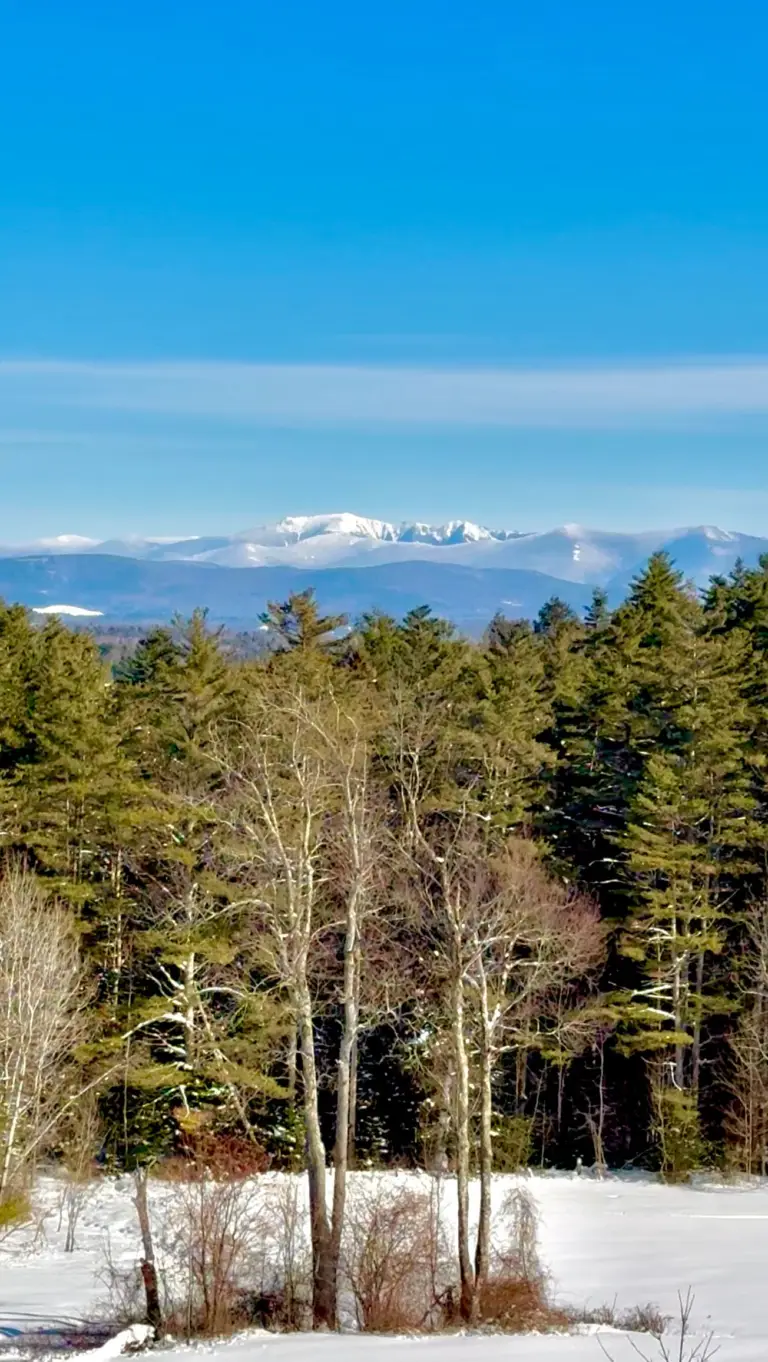
From parts of Vermont’s Upper Valley, you can catch surprisingly dramatic long-distance views across the Connecticut River Valley toward New Hampshire’s White Mountains, including peaks within the Presidential Range. It’s the kind of view that’s easy to mistake for another layer of Vermont mountains until you realize just how far you’re actually seeing.
And these aren’t just any mountains on the horizon.
The Presidential Range includes some of the highest and most rugged peaks in New England, including 6,288-foot Mount Washington. Depending on where you’re standing and the clarity of the atmosphere, this massive New Hampshire mountain landscape can become the backdrop to the farms, fields and small towns of east-central Vermont.
It’s one of my favorite reminders that you don’t always need to climb a summit to find an incredible mountain view in Vermont. Sometimes you just need a clear day and to know which direction to look.

What Is the Presidential Range?
The Presidential Range is part of New Hampshire’s White Mountains and contains a concentration of some of the highest peaks in the Northeast.
Many of its mountains are named for U.S. presidents and other prominent historical figures, including Mount Washington, Mount Adams, Mount Jefferson, Mount Madison, Mount Monroe, Mount Eisenhower and Mount Pierce. Several summits rise above 5,000 feet, creating a distinctive mountain skyline that can be visible from surprisingly far away when conditions cooperate.
The highest and most recognizable is Mount Washington, which reaches 6,288 feet and is the tallest mountain in the northeastern United States.
What makes the Presidential Range so visually striking isn’t simply its elevation. The higher peaks rise above treeline into exposed alpine terrain, creating a rugged landscape that looks noticeably different from the lower, heavily forested mountains surrounding it.
When you’re looking toward the range from Vermont, you’re seeing some of the most dramatic mountain terrain in New England from miles away across the Connecticut River Valley.
Why Is Mount Washington So Impressive?
Mount Washington’s elevation is only part of its story.
The mountain is famous for its extreme and rapidly changing weather, with its location and exposed summit contributing to high winds, snow, ice and conditions that can be dramatically different from those in the valleys below.
Its upper elevations also contain a true alpine environment, something relatively rare in the Northeast. That exposed terrain helps make Mount Washington and its neighboring Presidential peaks particularly recognizable from a distance.
When snow remains on the highest elevations, the range can become even easier to distinguish from Vermont. White summits rise above darker forests and surrounding hills, creating layers of mountains that seem to continue much farther into the distance than you’d expect.
Knowing you’re looking all the way toward Mount Washington makes the view considerably more impressive.

Where Can You See the White Mountains From Vermont?
Newbury and Bradford are two of my favorite Vermont towns for catching these long-distance views.
Both sit in east-central Vermont near the Connecticut River and the New Hampshire border, giving parts of the surrounding landscape surprisingly long sightlines toward the White Mountains.
You aren’t necessarily looking for one designated scenic overlook with a sign pointing toward Mount Washington. Instead, pay attention as you’re exploring open areas around these towns, particularly elevated roads, agricultural landscapes and places where trees don’t obstruct the eastern horizon.
That’s part of what makes finding the view so much fun.
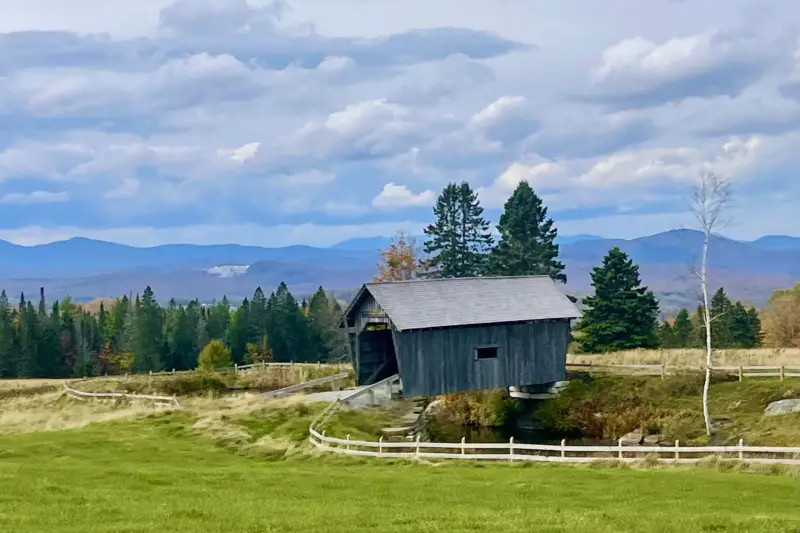
You can be driving through a landscape that feels completely and unmistakably Vermont when an opening suddenly reveals a massive mountain range in the distance. The fields, barns and hills immediately around you are in Vermont, while those rugged peaks on the horizon are rising much farther away in New Hampshire.
Why Can You See the Presidential Range From Vermont?
The geography of this part of Vermont makes these views possible.
Newbury and Bradford sit near the broad Connecticut River Valley, with New Hampshire immediately to the east. From locations with enough elevation and an unobstructed sightline, you can see across the valley and well into the mountains beyond.
Then there’s the height of the Presidential Range itself.
Mount Washington reaches 6,288 feet, while several neighboring peaks exceed 5,000 feet. Those high summits rise substantially above the surrounding landscape, allowing them to remain visible across long distances when the atmosphere is exceptionally clear.
It can play tricks with your perception.
The mountains sometimes appear close enough to be part of the immediate landscape, even though you’re looking across a significant stretch of New Hampshire to reach them.


When Is the Best Time to See the Presidential Range From Vermont?
Visibility matters more than season although a snowy scene has my vote.
A completely sunny day isn’t necessarily enough if there’s significant haze along the horizon. Instead, look for those exceptionally crisp days when the atmosphere is clear and distant features seem unusually sharp.
I particularly love this view in winter and early spring because snow on the Presidential Range can make the higher summits easier to identify. The white upper elevations stand out against the surrounding landscape, emphasizing just how much higher these mountains rise.
Late fall can also bring excellent visibility after summer humidity disappears, while clear winter air can make the range feel remarkably close.
Summer views are certainly possible, but humidity and haze can soften the horizon enough that the White Mountains nearly disappear.
That’s one reason this view can feel so unexpected. You might travel the same road repeatedly without realizing what’s out there, then drive through on one perfect day and suddenly see an enormous mountain range sitting on the horizon.
One of My Favorite Kinds of Vermont Views
I love a good summit view, but some of my favorite Vermont landscapes are the ones you stumble across without hiking anywhere.
They’re the views that suddenly appear around a bend in a road, across an open field or between two hills and make you slow down because you weren’t expecting to see quite that far.
The Upper Valley is particularly good for this because the Connecticut River corridor creates perspectives that are completely different from what you’ll find when looking across other parts of Vermont.
In Newbury and Bradford, you’re not simply looking at the mountains immediately surrounding you. On the right day, your view can extend across state lines toward one of the most recognizable mountain ranges in New England.
And once you know the Presidential Range is out there, you’ll start looking for it every time you travel through this part of Vermont.
Look East on Your Next Clear Day
The next time you’re exploring Newbury, Bradford or this stretch of Vermont’s Upper Valley, pay attention to the eastern horizon.
Find an open view and look beyond the farms, forests and hills immediately in front of you.
On an ordinary day, the Presidential Range might be hidden behind clouds or disappear completely into the haze. But when the atmosphere clears, New Hampshire’s White Mountains can suddenly emerge in the distance, with some of the Northeast’s highest peaks rising far beyond the Vermont landscape.
No trailhead required. There aren’t hours of climbing. No summit necessary.
Just a clear day, an open view and a reminder to look a little farther toward the horizon.






Talk with locals
Comments
Be the first to chime in
Been here? Your tip could save the next visitor a wrong turn.