
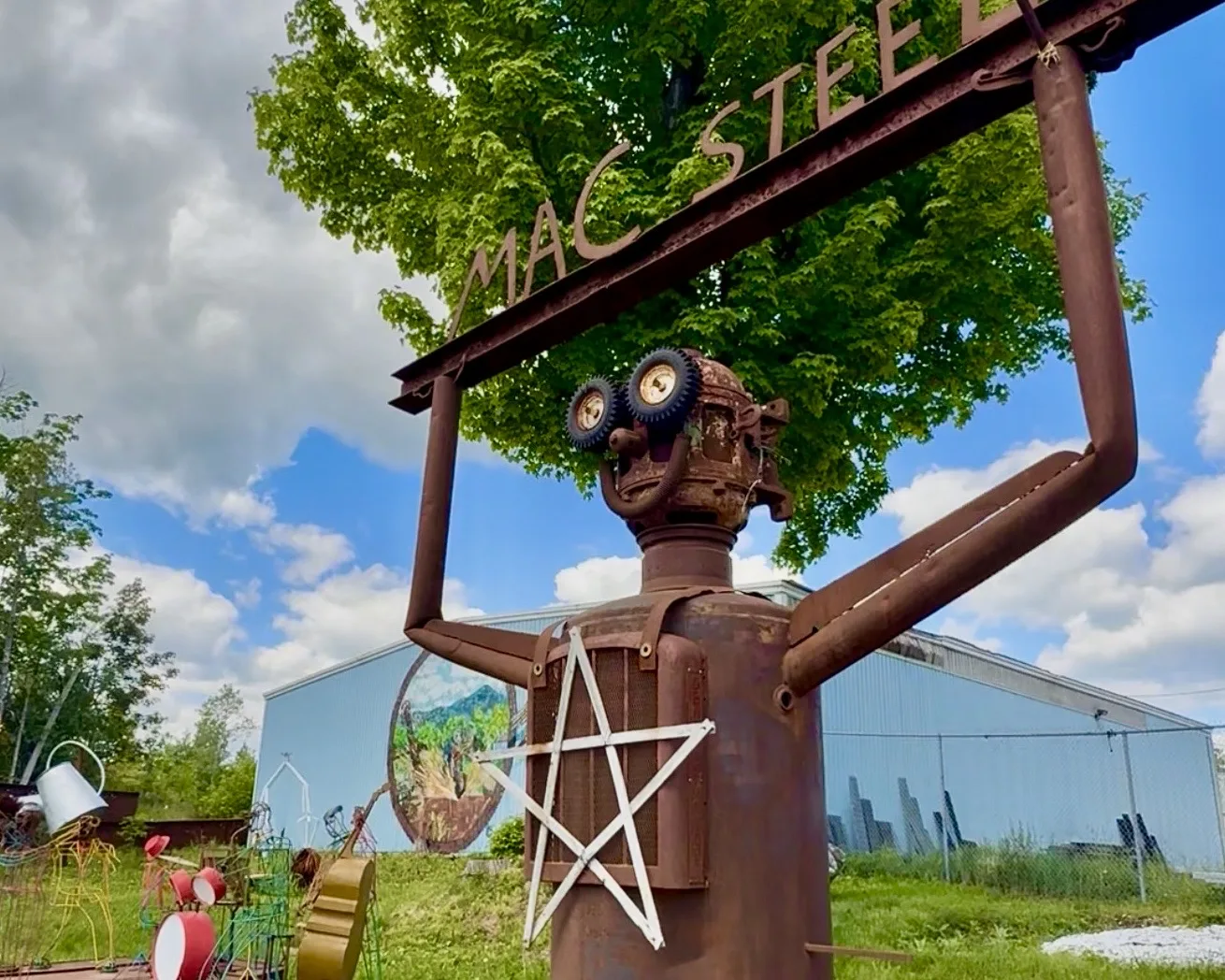
One of the things I love most about Vermont is that some of our best roadside attractions appear when you least expect them.
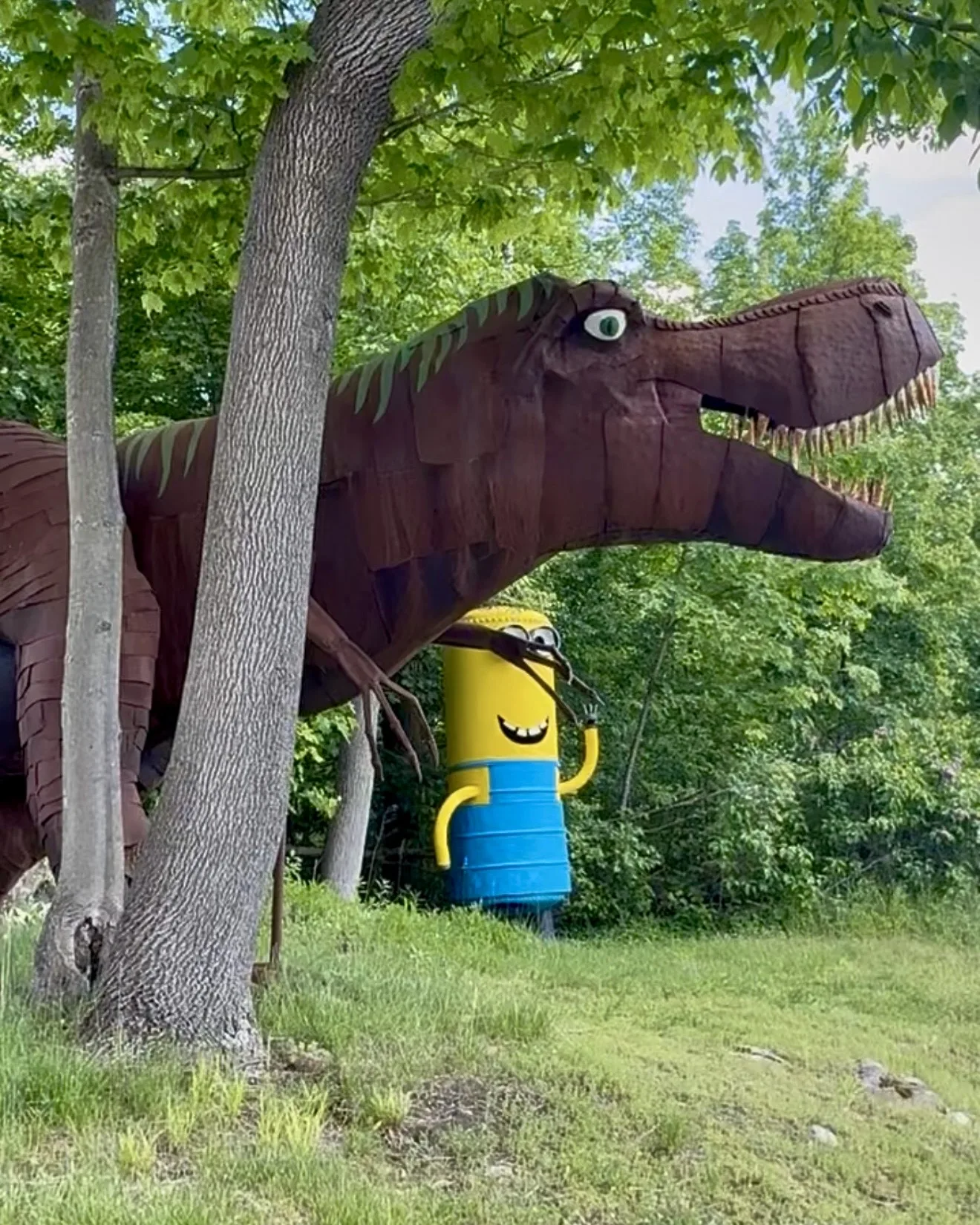
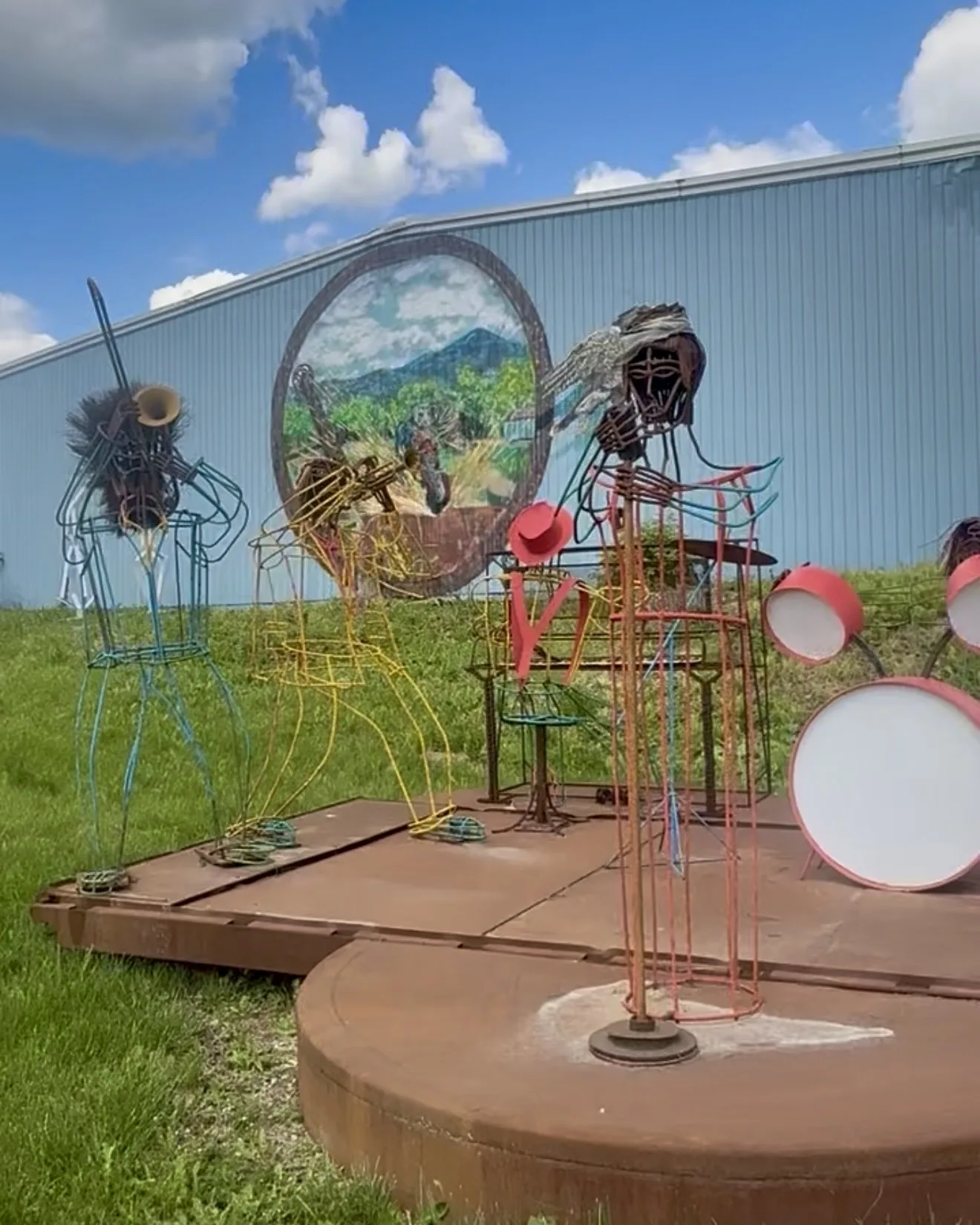
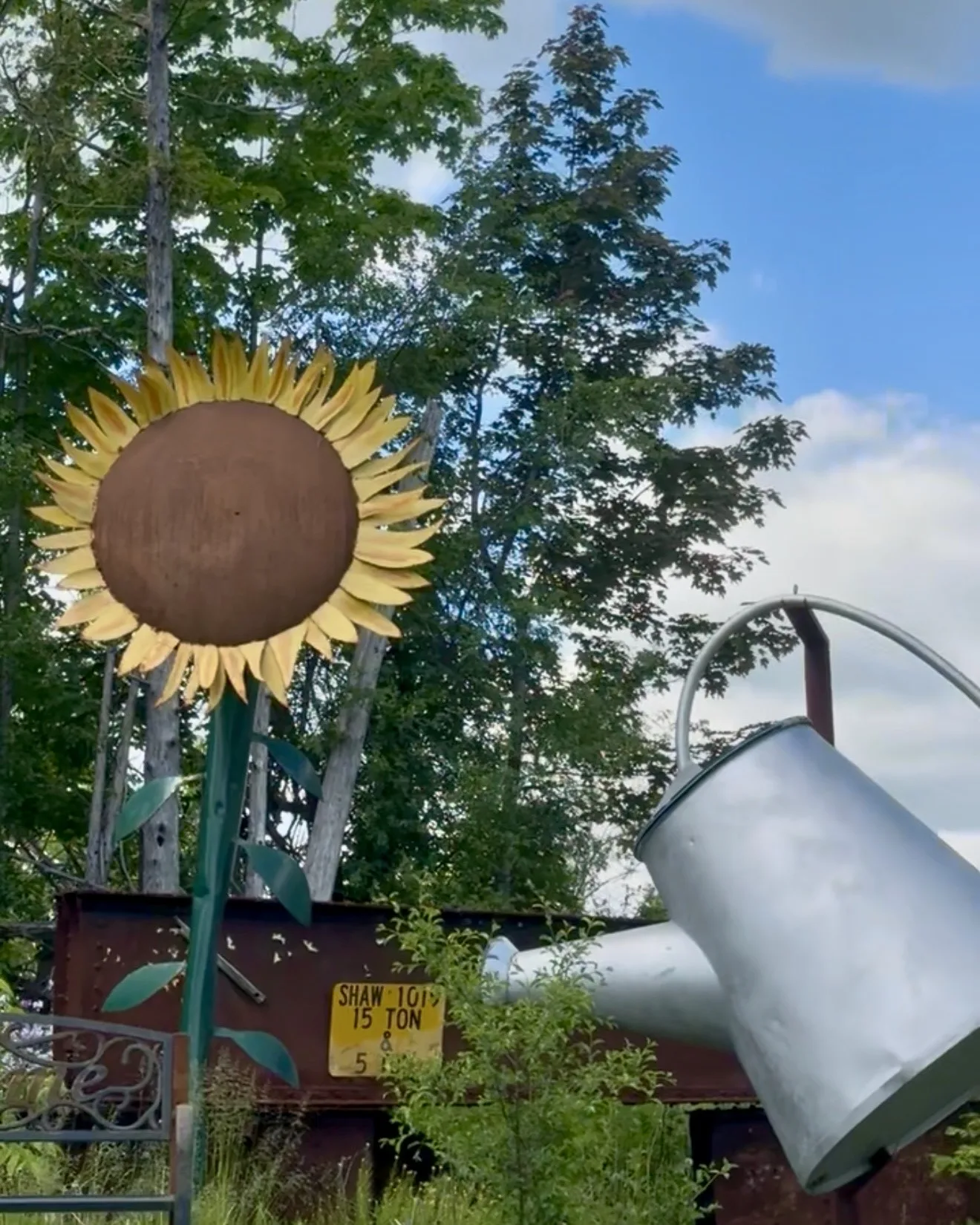
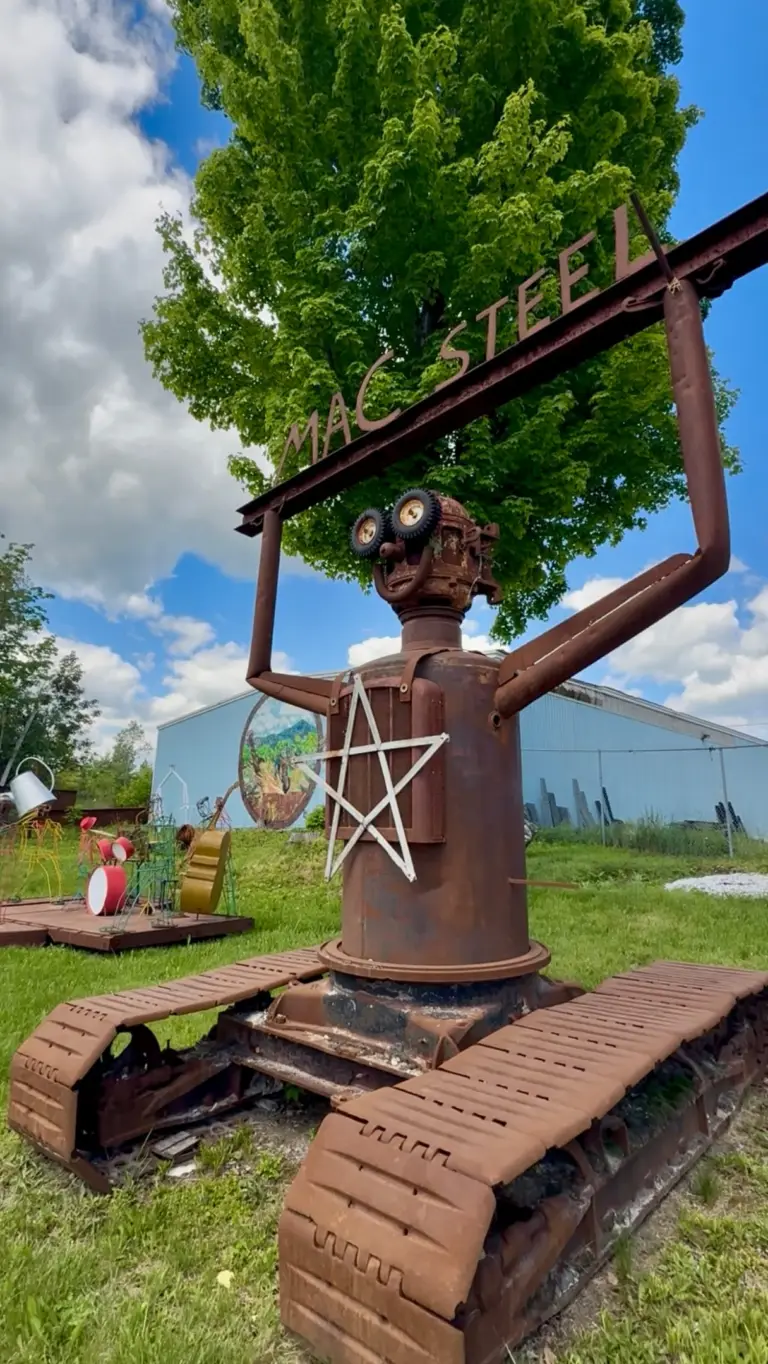
Drive Route 7 through Rutland and you may suddenly find yourself doing a double take at a giant metal T-Rex, a whimsical jazz band built from scrap steel, a towering robot, oversized sunflowers or another larger-than-life creation standing along the road.
They’re weird. They’re wonderful. And there’s a lot more history behind them than you might realize when you first drive past.
These steel sculptures have become one of Rutland’s most recognizable roadside attractions, but their story begins with a longtime family business, two Holocaust survivors and a scrapyard that unexpectedly became a place where industry and art collided.
And for the record, the saxophone player is my favorite. Look closely at his hair.
The Story Behind Rutland’s Giant Metal Sculptures
The sculptures are connected to the legacy of Mac Equipment and Steel Company, also known as MacScrap, a longtime Rutland scrapyard and steel business.
The company was founded in 1953 by David and Sonia Mac after they emigrated to Rutland in 1949. Both were Holocaust survivors who eventually built a new life and family business here in Vermont.
For decades, the company worked in scrap metal and steel, taking in material that might otherwise have been discarded and putting it back into use. Steel is particularly well suited to recycling because it can be recycled repeatedly, which makes the sculptures lining the property an especially fitting extension of the work happening behind them.
Instead of seeing scrap only for what it had been, artists began imagining what else it could become.
When a Vermont Scrapyard Became an Art Destination
Over the years, artists visited the Rutland yard and found inspiration among the piles of discarded steel.
Pieces that had reached the end of one useful life suddenly had the potential for another. Scrap could become a dinosaur. Industrial parts could become musicians. Pieces of metal could be transformed into flowers, robots and enormous characters designed to make passing drivers look twice.
What began as a working scrapyard gradually became an unlikely canvas for public art.
That’s part of what I love about these sculptures. They aren’t sitting inside a traditional gallery where you have to seek them out. They’re right there along one of Vermont’s busiest roads, mixed into the landscape of everyday errands and commutes.
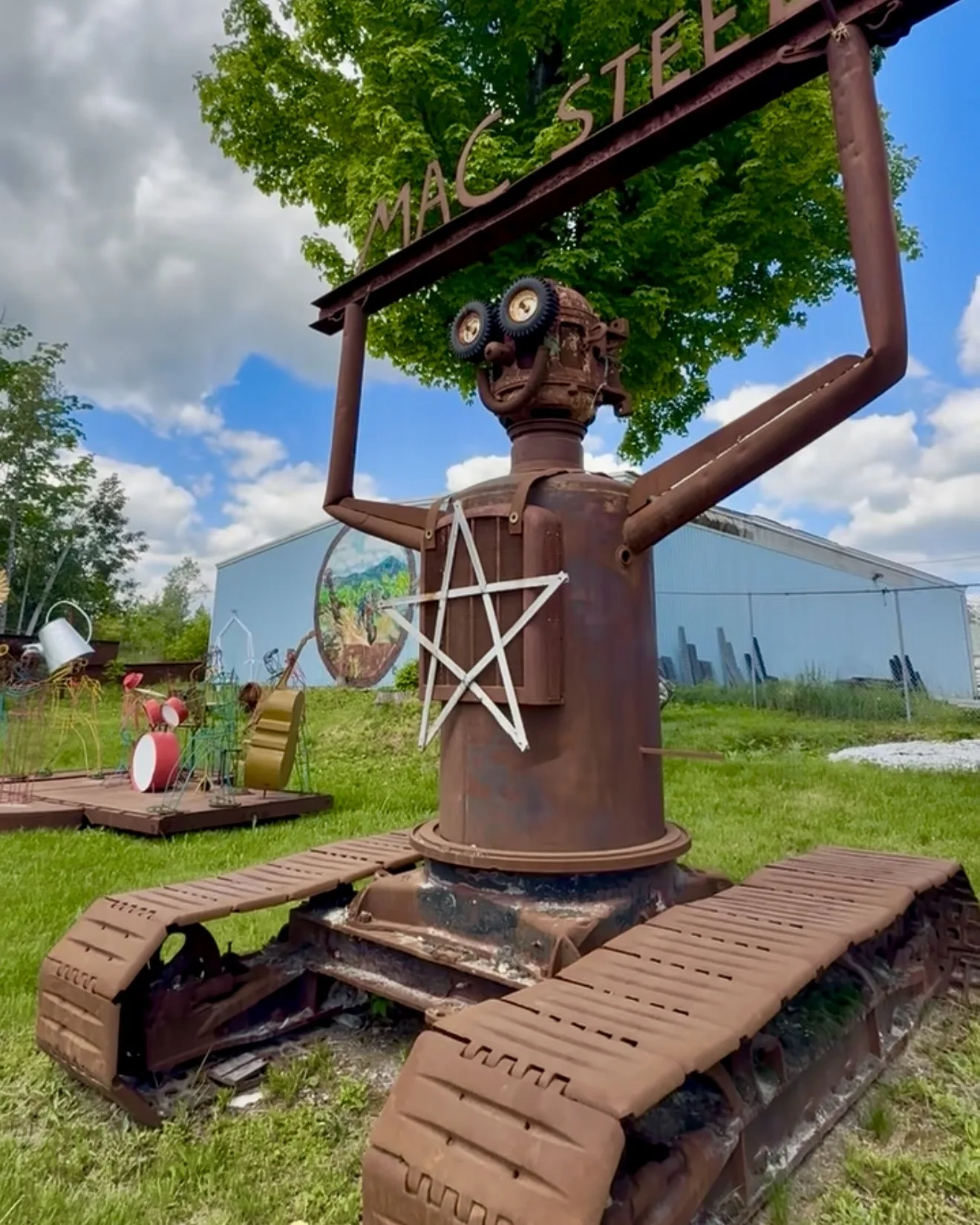
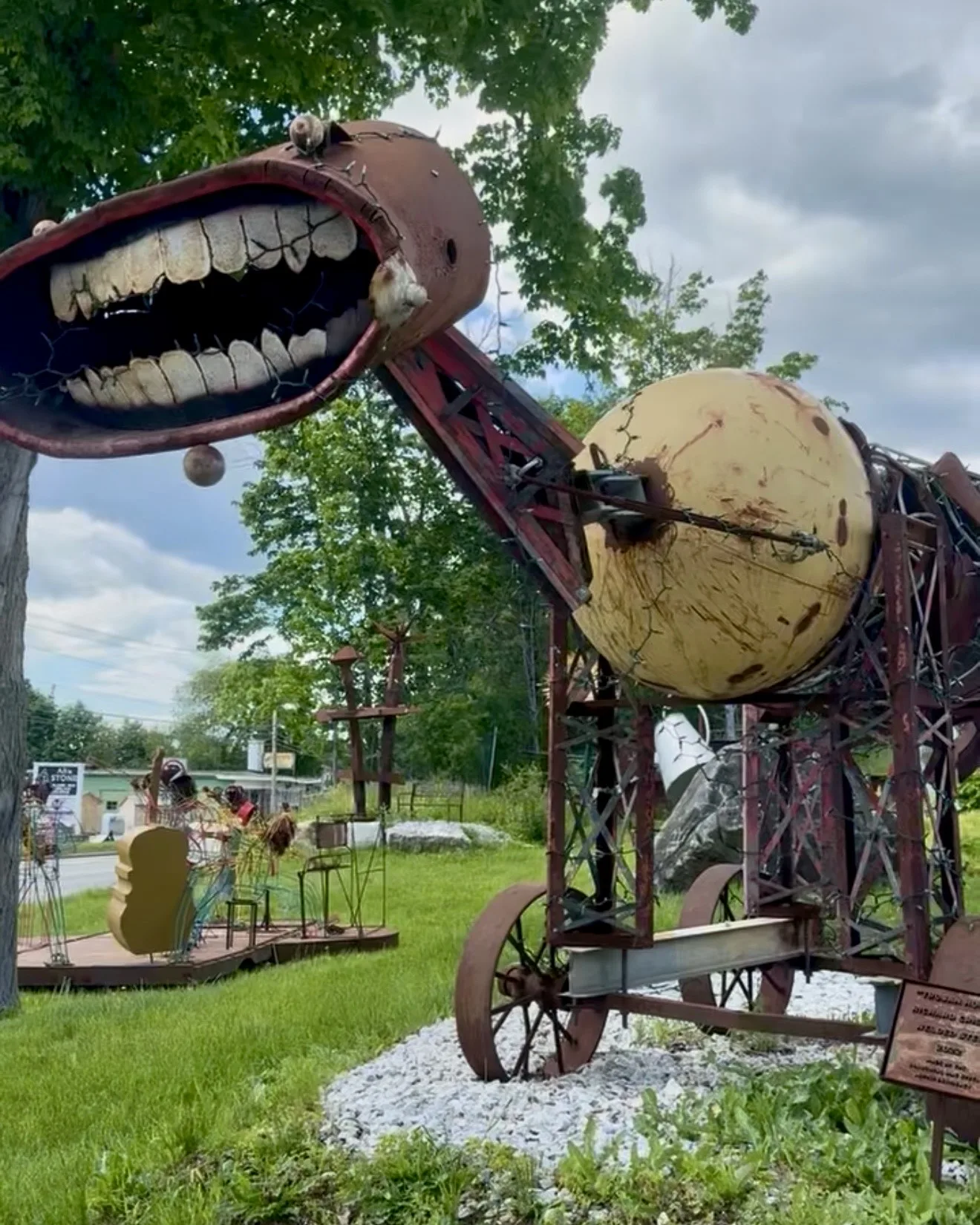
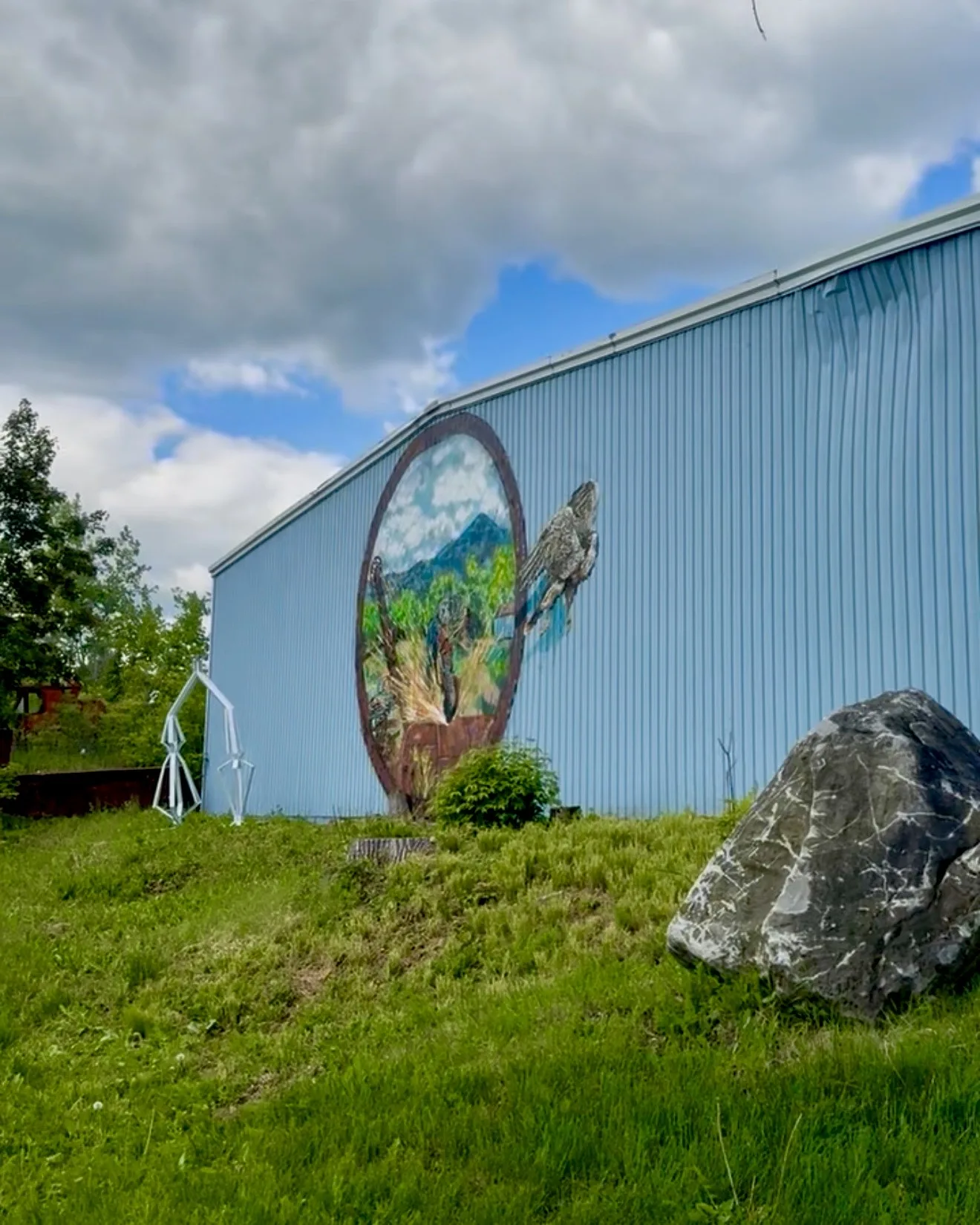
Meet the T-Rex, Jazz Band and Other Route 7 Sculptures
You don’t need directions to a hiking trail or a ticket to see this particular Vermont attraction.
Just drive Route 7 through Rutland and keep your eyes open.
The collection has included a giant T-Rex, oversized flowers, robots and an entire group of metal musicians. The sculptures are big enough to catch your attention from the road but detailed enough that they’re worth slowing down to really look at.
My personal favorite is the saxophone player.
There’s something about the expression, pose and especially that wild metal hair that makes him impossible not to love.
The pieces manage to be industrial and playful at the same time. You can see the scrap material they came from, but you can also immediately see the personality each artist gave it.
“Visual Therapy” for Route 7
Perhaps my favorite part of the story is why the sculptures were displayed so prominently in the first place.
The Mac family has described the roadside artwork as a kind of “visual therapy” for the thousands of commuters and travelers passing the property.
The idea was wonderfully simple: give people something unexpected to see during an otherwise ordinary drive.
And it worked.
Instead of a scrapyard simply blending into an industrial stretch of Route 7, the property became a Rutland landmark. Generations of Vermonters and visitors have driven past these enormous







Talk with locals
Comments
Be the first to chime in
Been here? Your tip could save the next visitor a wrong turn.